

Use Context Panel on iPhone#
Supported platforms: iOS
Hint
See this article to learn how to use Context Panel on Android devices.
Note
Presently, due to an Outlook mobile limitation, Context Panel is supported only with Microsoft 365 email accounts in Outlook for Android and iOS. Microsoft Exchange Server accounts are not supported. At that, users’ data from Microsoft Exchange Server accounts can be handled using Context Sync, through auto-saving or the custom Salesforce category / folder / list.
Revenue Grid lets you save contacts, emails, events, and tasks to Salesforce directly from Outlook on your smartphone or tablet, helping your team keep Salesforce records up to date while on the go.
You can also use Context Panel to create and update Salesforce records, including contacts, tasks, and calendar events. Server-side Context Sync automatically synchronizes supported changes between your email server and Salesforce.
On devices with larger, higher-resolution screens, such as tablets, you can also use the full version of Context Panel in Outlook on the web through a supported mobile browser.
Handling business communication data via iPhone#
To save an email, contact, or task in Salesforce from a mobile device, you may use the basic methods provided by Context Sync or the Save button provided by the mobile rendition of Context Panel.
You can also use other Context Panel features in Outlook for iOS or Android, such as creating and searching for Salesforce records, suggesting meeting times with Time Slots, and scheduling meetings with Book Me.
In Outlook for iOS#
Use prerequisites:
Install Context Panel for your email account
Also refer to this article to learn how to install Context Panel using Outlook for iOS if it wasn’t installed.
Saving Outlook emails from iPhone#
Revenue Grid processes to Salesforce only emails marked this way, this excludes the risks that your personal emails might get synced there from your mobile.
Emails can be saved in one of the following ways, only in read mode:
using the Save email button in the mobile rendition of Context Panel
using the custom Salesforce Emails folder
Emails saving via the Save email button#
This method has the following advantages: you can set what records to link to the saved item in Salesforce and edit the resulting item’s key fields Subject, Priority, Status, etc. using the Save dialog; saving is performed immediately.
To save an email:
In mobile Outlook in the Inbox or Sent folders, select a business email your want to save in Salesforce.
Tap the menu icon on the top and select Open Revenue Grid.
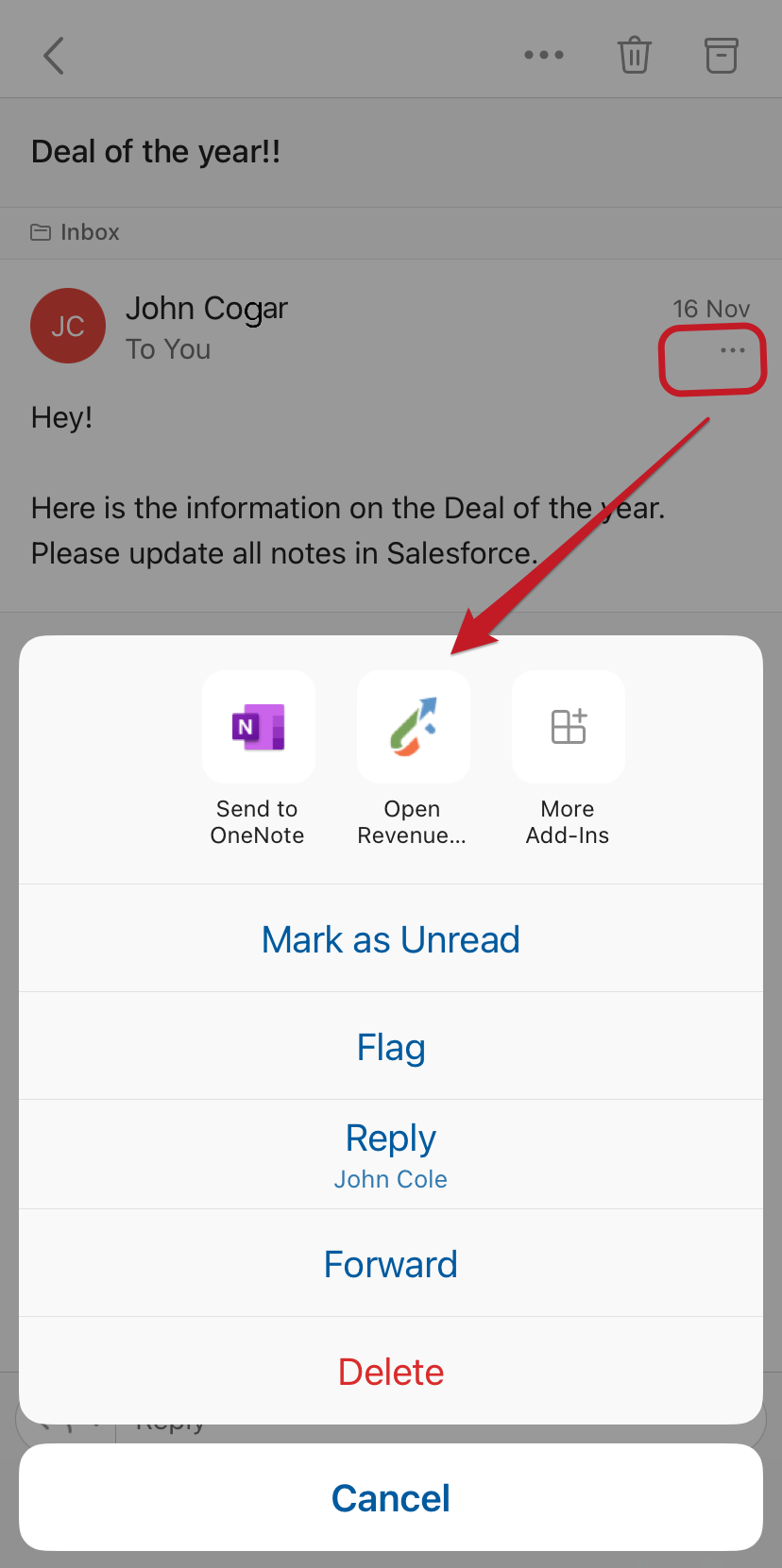
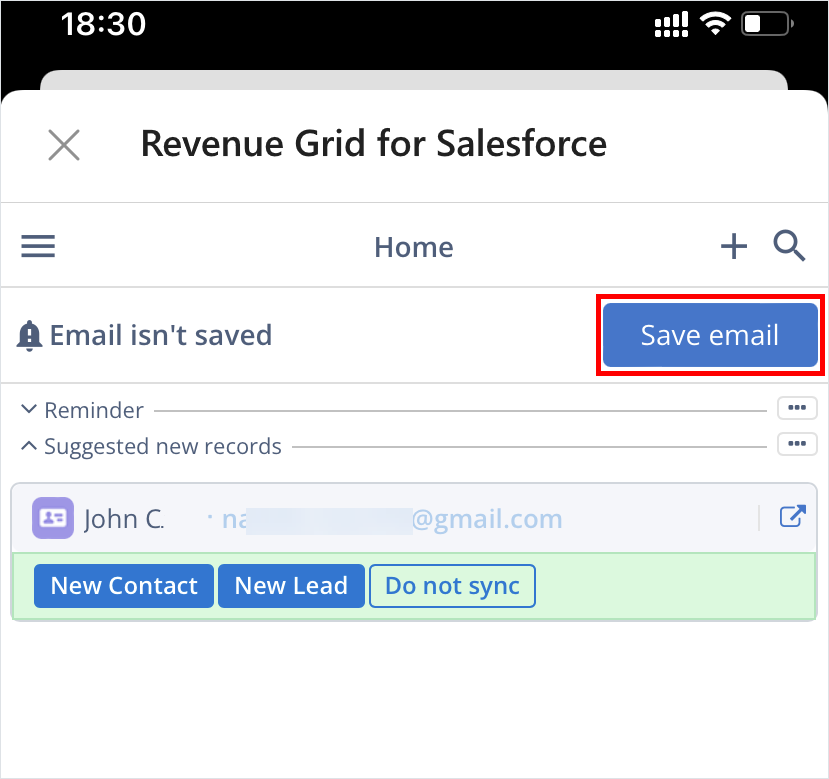
The Home screen of the mobile rendition of Context Panel will be opened. Tap the button Save email in its upper-right corner.
Pick relevant records to be linked using the search field or the checkboxes next to suggested records.
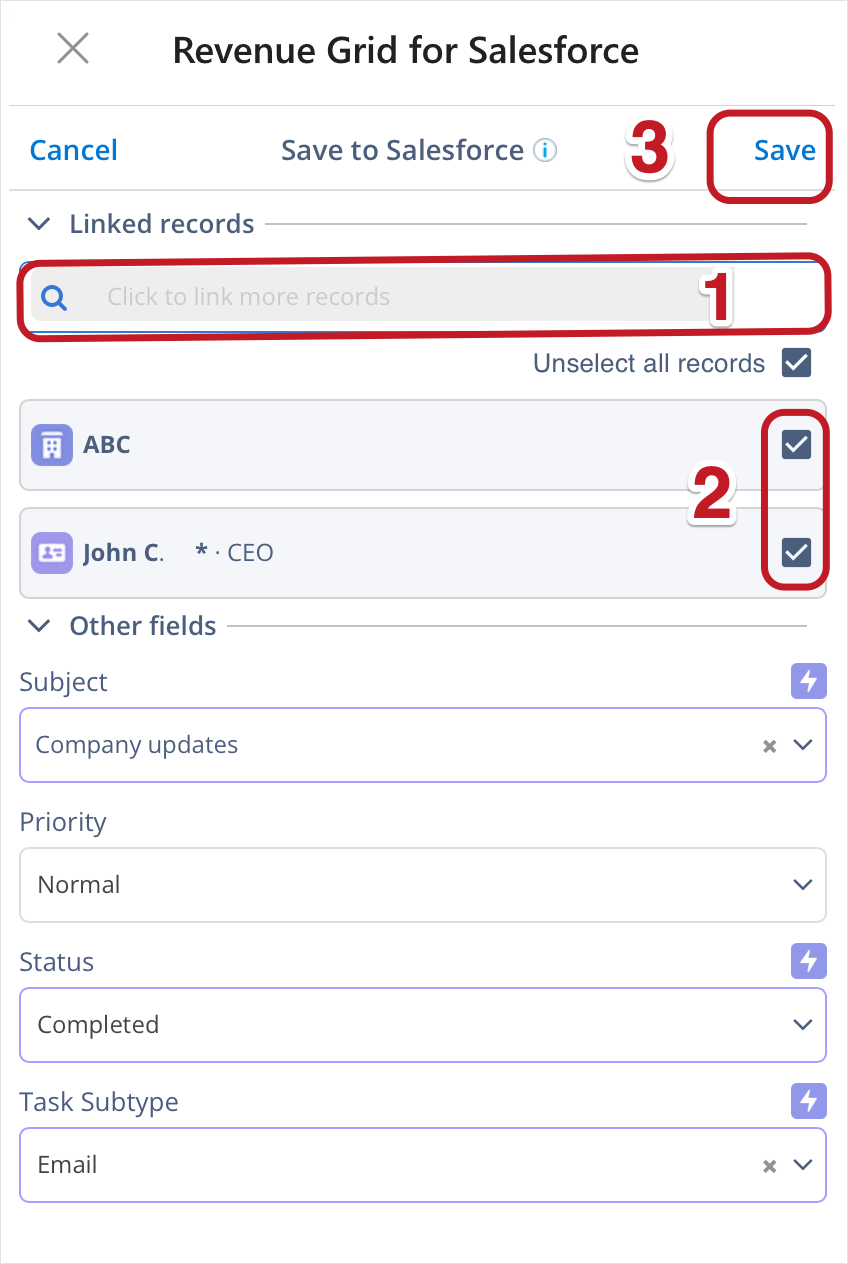
Optionally modify key fields of the saved item.
Tap the Save button on the top. As soon as the email is saved you will see a green pop-up notification.
Emails saving via the dedicated folder#
If you use either of these three methods, emails get saved on the following sync session, that may take from 1 to 30 minutes.
As soon as an email from the dedicated folder is saved, it gets the custom Salesforce Email category. Feel free to move saved emails back to Inbox or Sent folders from the dedicated folder after they are saved.
If the dedicated folder method is used, emails get saved linked to auto-retrieved related records.
Method 1
Tap, hold and drag the needed business email to the right, then put it into the Salesforce Emails folder.
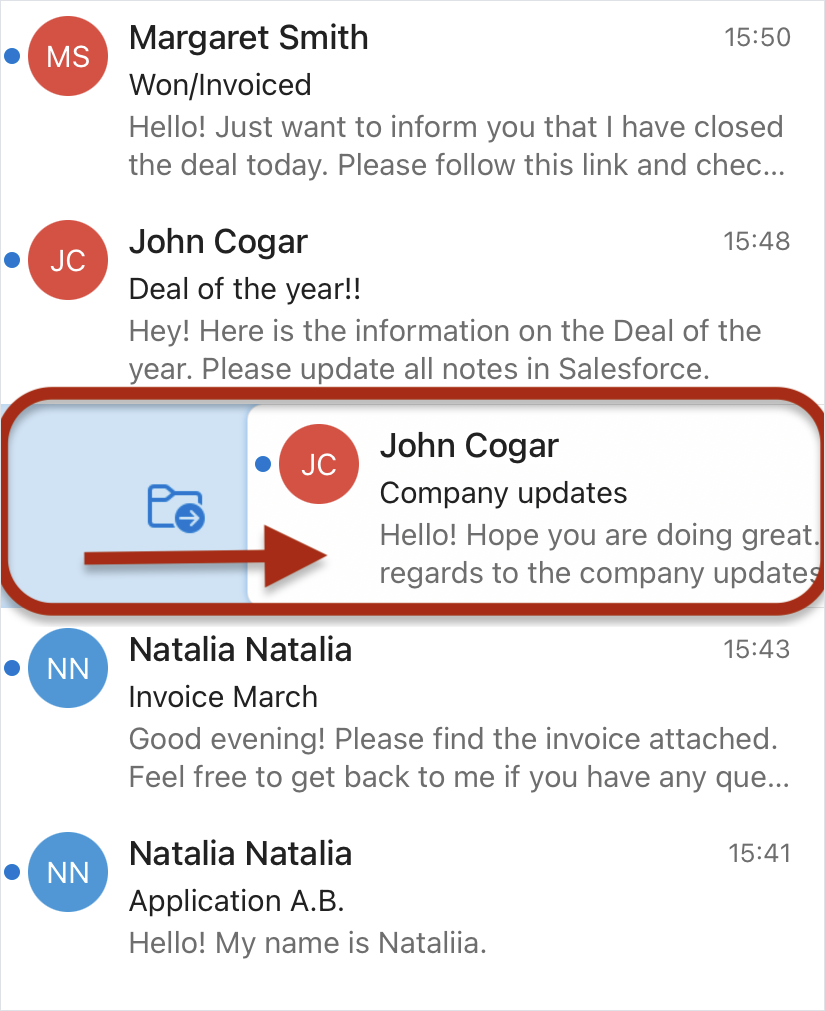
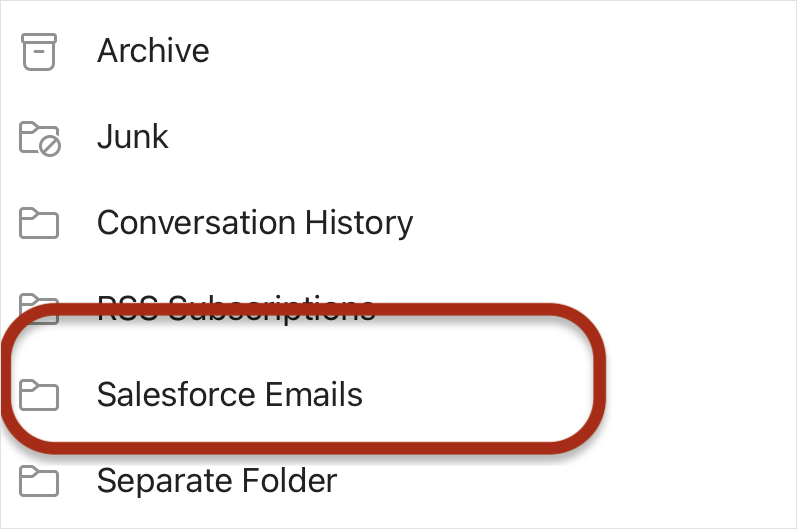
Method 2. Also used for bulk emails processing:
Tap the circle next to the needed business emails to select them, then tap the Move to folder icon in the bottom toolbar and select the Salesforce Emails folder.
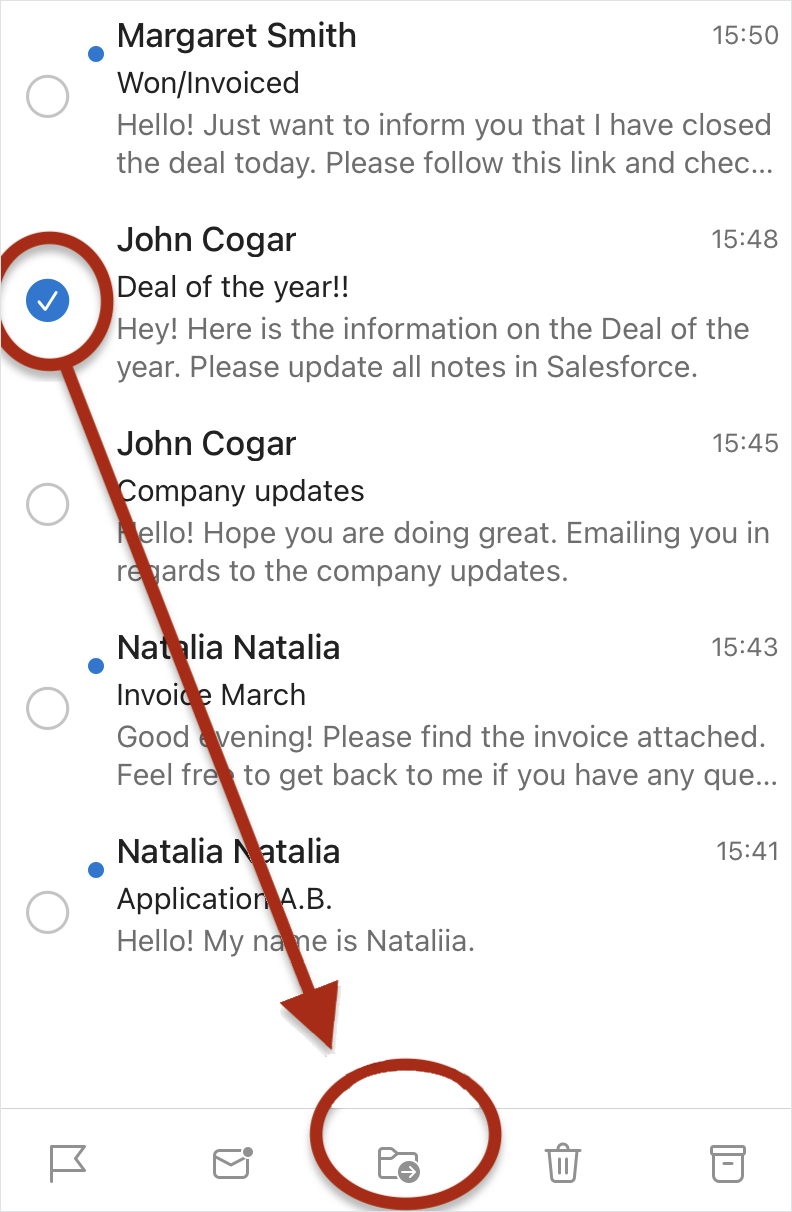
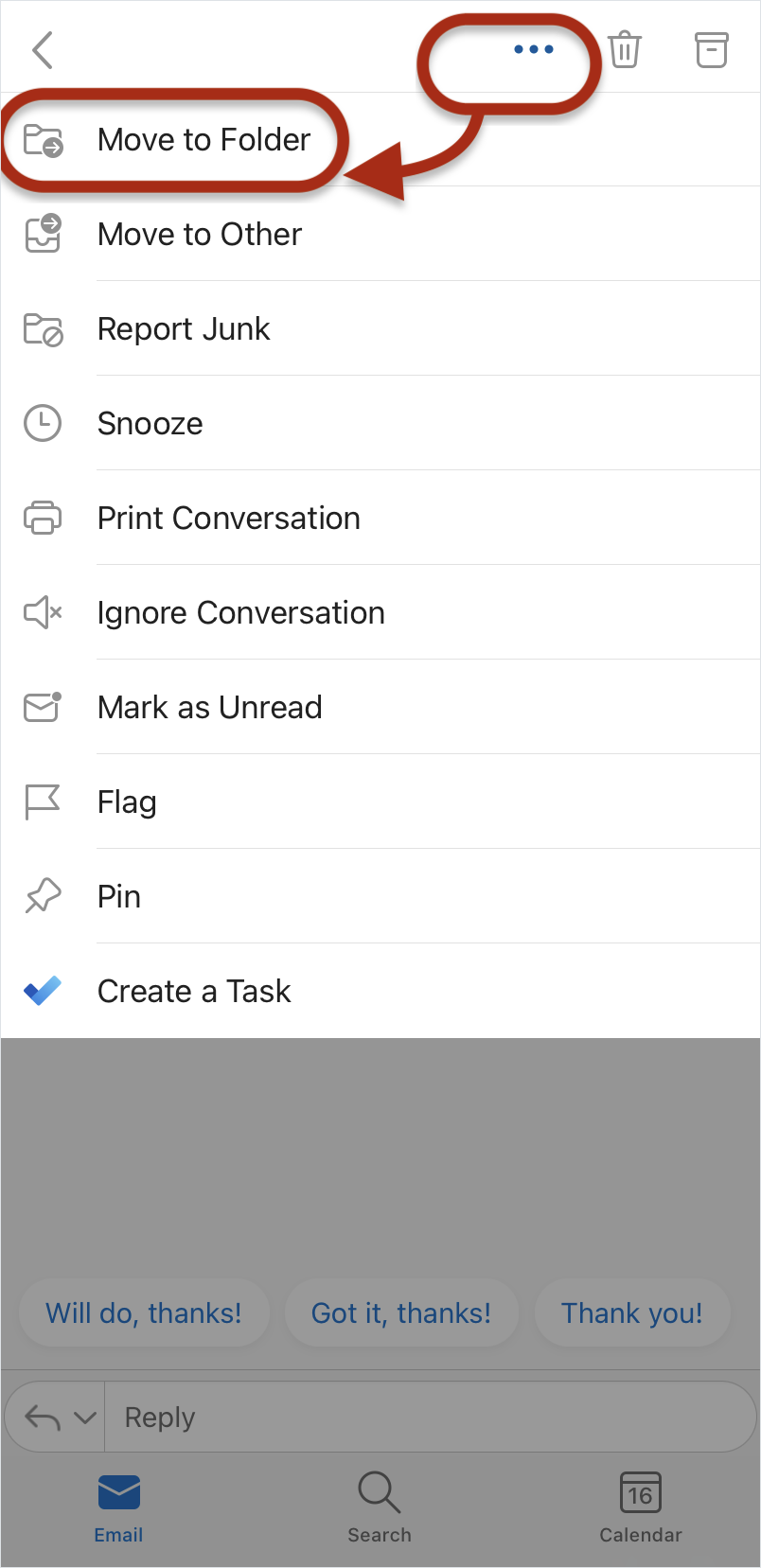
Method 3
Open the needed business email. Next, tap the menu icon on the top and select the action Move to Folder > Salesforce Emails folder.
Syncing Outlook calendar items from iPhone#
Since mobile Outlook does not allow custom categories assigning and Context Panel is unavailable for opened calendar items, there are only three options for managing calendar items:
events creation via Time Slots or Book Me.
you may also create new Salesforce Events directly using the + (Create) button in Context Panel. At that, any Events created this way will appear in Outlook as attendee-less appointments.
In addition, any changes to calendar items created in Salesforce or synced from desktop Outlook or Outlook on the web also get reflected in Outlook mobile calendar.
Using Time Slots and Book Me on iPhone#
Book Me and Time Slots are also available in the mobile implementation. Meeting invitation links generation dialogs are mostly identical to the desktop implementation, see the following articles for complete information: Book Me; Time Slots.
Syncing Outlook contacts from iPhone#
Revenue Grid processes to Salesforce solely the contacts you marked this way, this excludes the risks that your personal contacts might get synced there from your mobile.
As long as a contact is synced, any updates of the contact on either side get mirrored on the other. To synchronize an Outlook contact with Salesforce, you need to assign it the custom Salesforce Contacts category:
Find a business contact that you want to sync in Salesforce in the Contacts list and left-swipe on it.
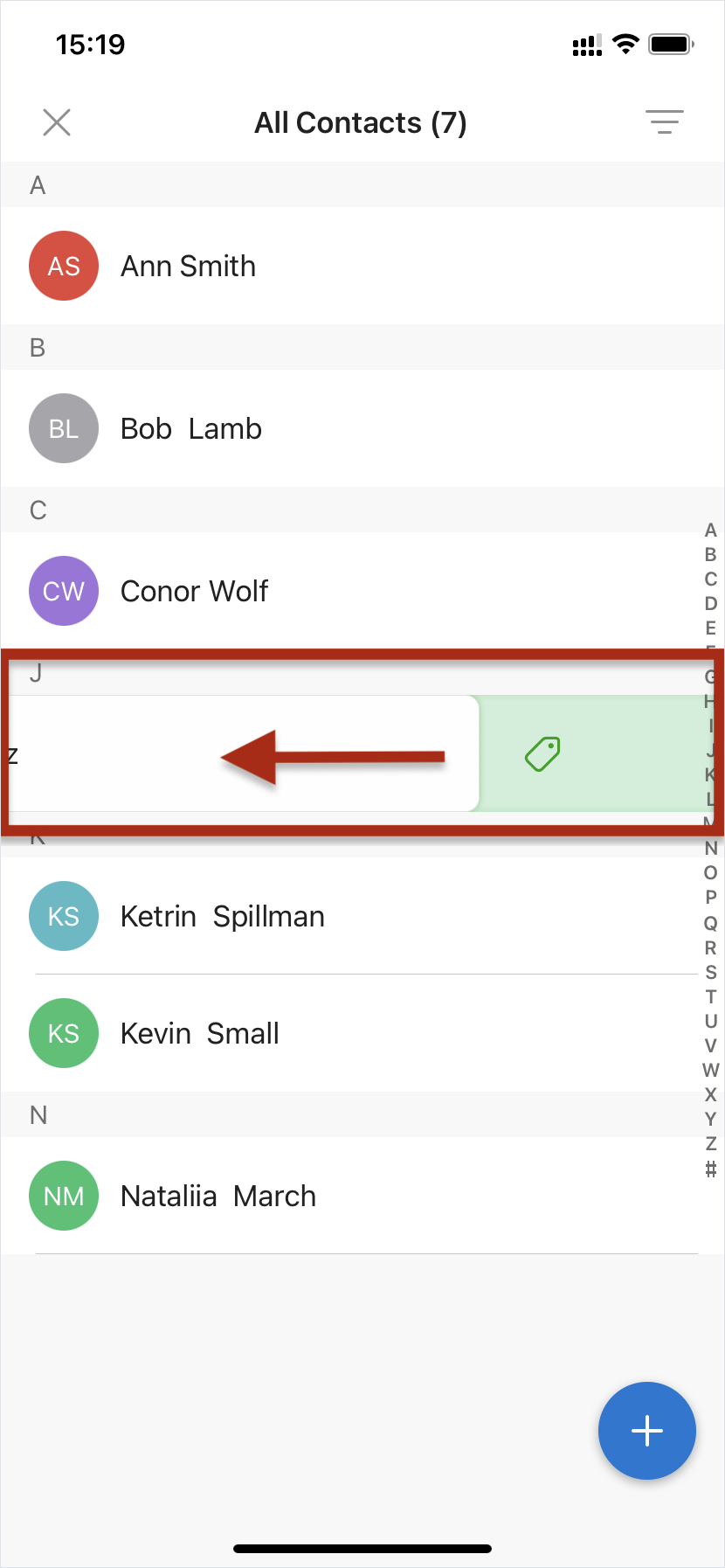
Select the Salesforce category to assign.
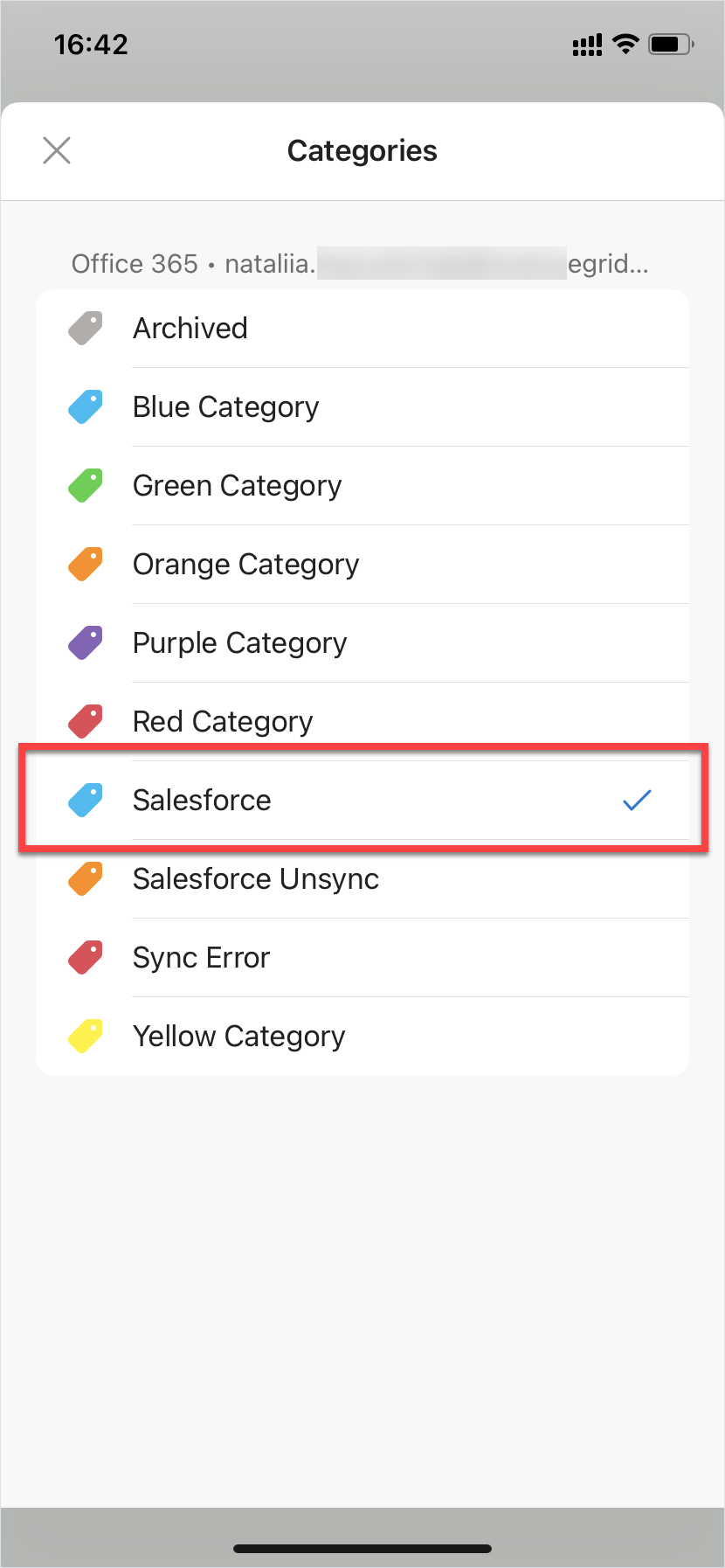
The contact will get synced in Salesforce on the following sync session within a span from 1 to 30 minutes.
To stop syncing a contact#
If you later need to stop syncing a contact, remove the Salesforce category by right-swiping on it.
Syncing Outlook tasks in Microsoft To Do app from iPhone#
Revenue Grid processes to Salesforce only tasks marked this way, this excludes the risks that your personal tasks might get synced there from your mobile.
As long as a task is synced, any updates of the task on either side get mirrored on the other. To synchronize an Outlook task with Salesforce, you need to assign it to the custom Salesforce Tasks list in Microsoft To Do app installed on your mobile:
Method 1: Create a task in the Salesforce Tasks list
Open Microsoft To Do app and tap the Salesforce Tasks list on its main screen.
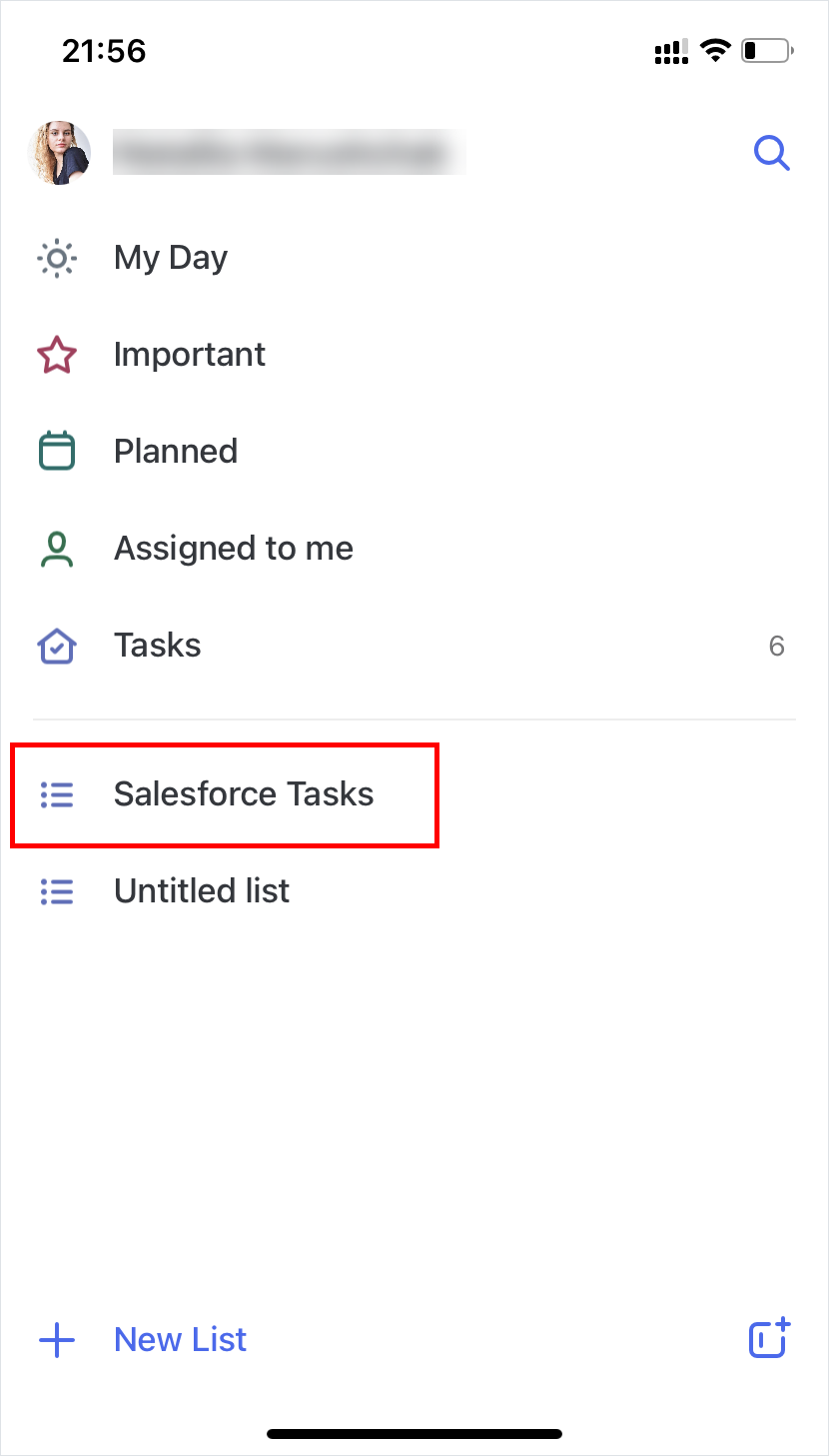
Tap Add a Task at the bottom, fill in task details and then tap Done.

The task you created will get synced in Salesforce on the following sync session within a span from 1 to 30 minutes.
Method 2. Bulk-move several tasks to the list
Open Microsoft To Do app.
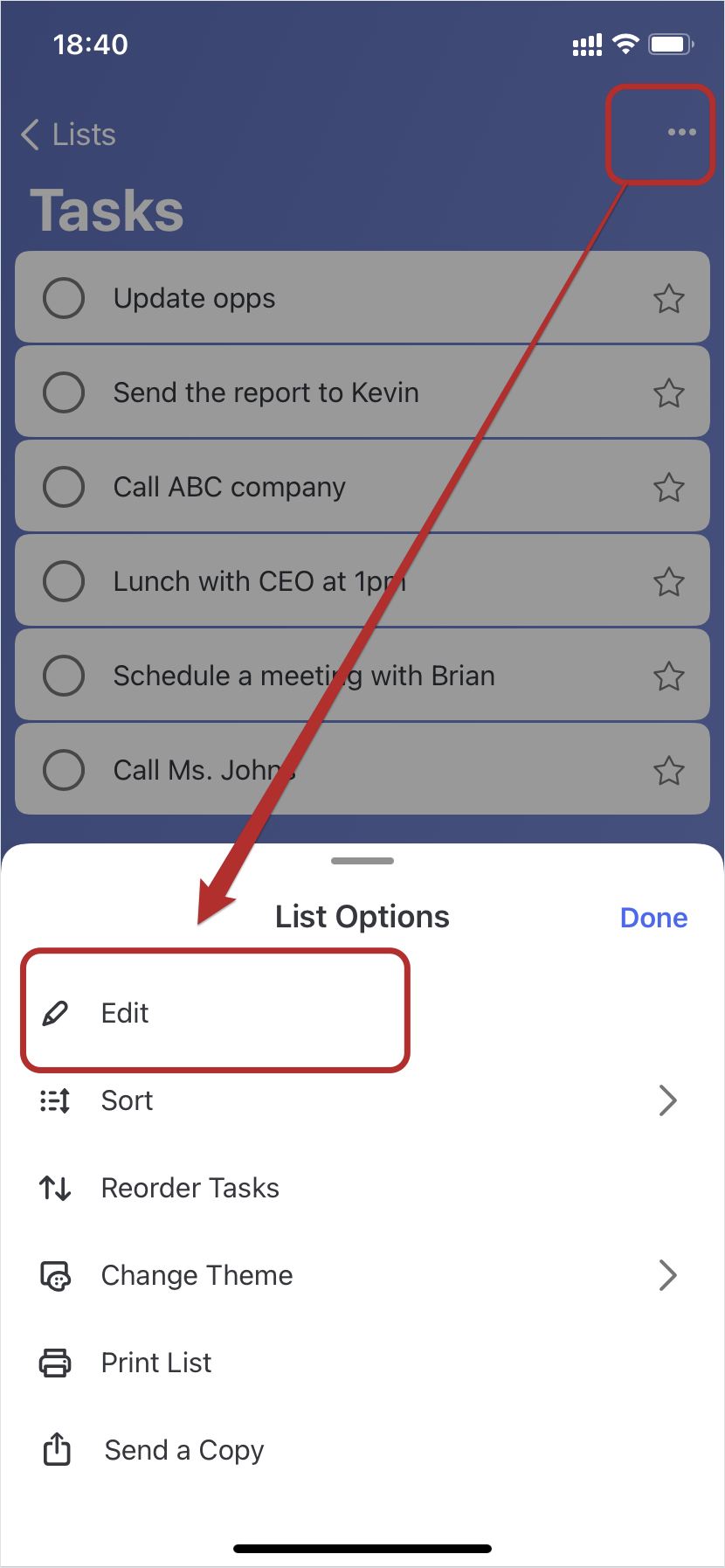
Expand the list that contains the tasks that you need to sync in Salesforce and tap the actions menu icon on the top, then select Edit.
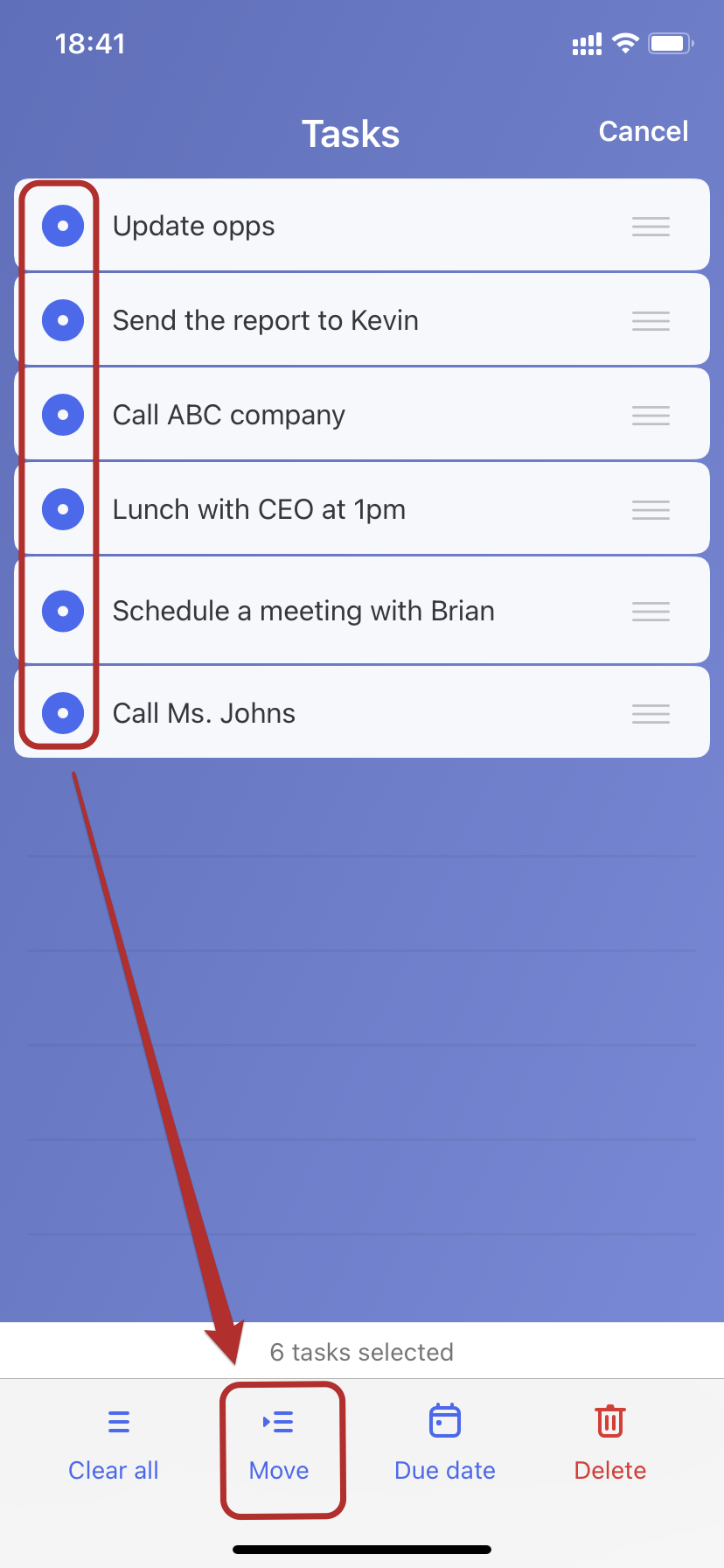
Mark the tasks you need to sync in Salesforce by tapping the circles next to them, then tap Move in the bottom toolbar.
Select the list Salesforce Tasks.
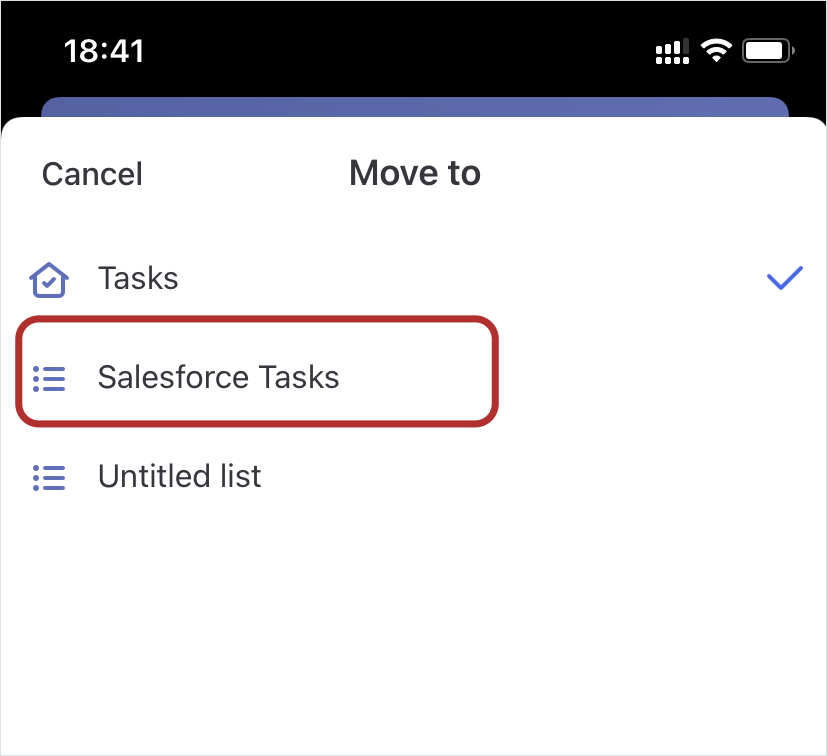
Selected tasks will get synced in Salesforce on the following sync session within a span from 1 to 30 minutes.
Method 3. Move a single task to the list
Open Microsoft To Do app.
Find the task that you need to sync in Salesforce and right-swipe on it, then tap on the 🢒≡ (List) icon.
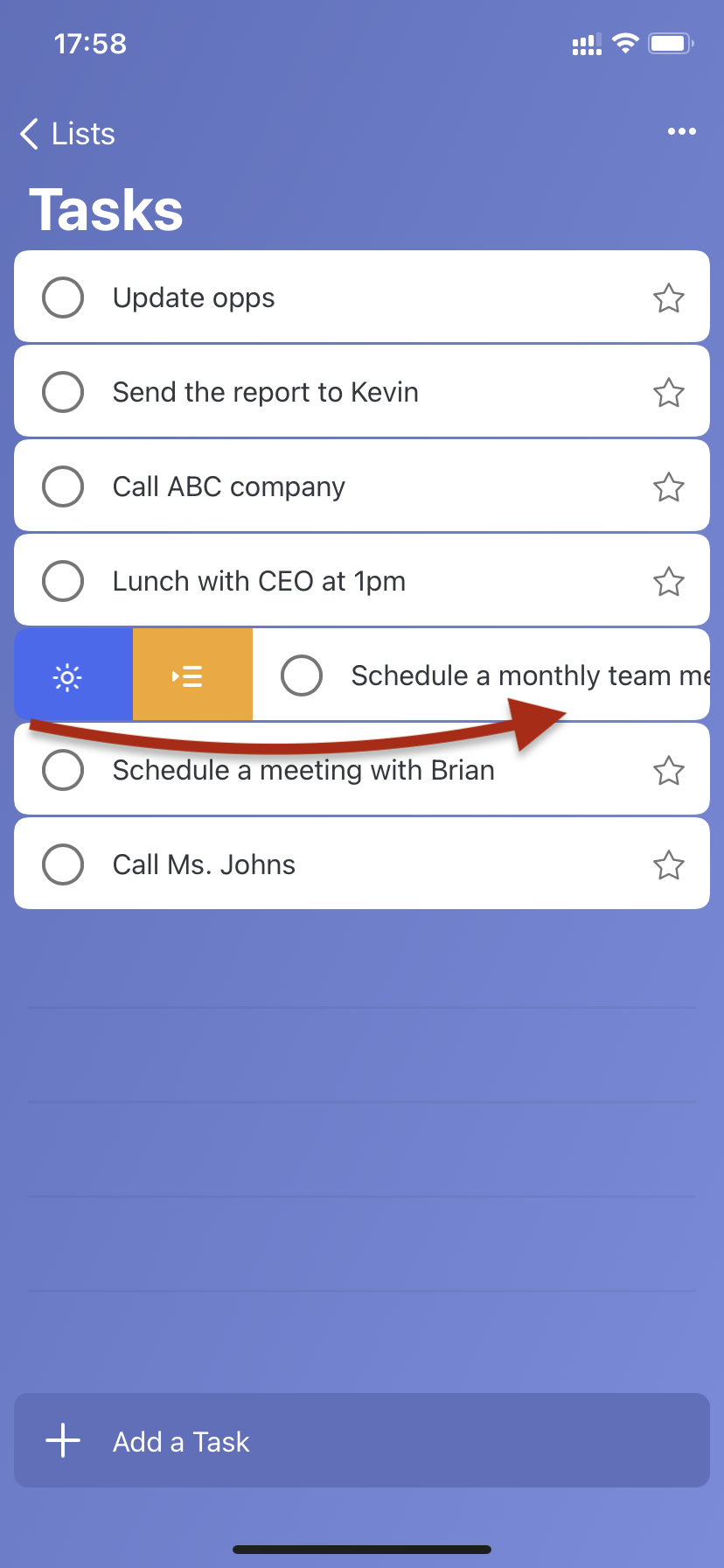
Select the Salesforce Tasks list to move the task there.
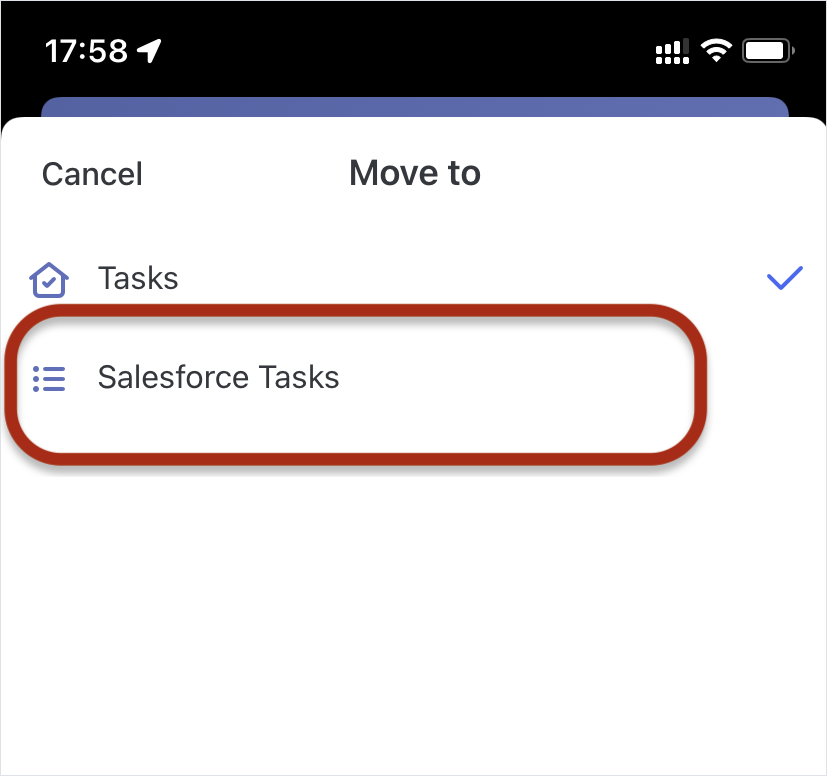
Selected tasks will get synced in Salesforce on the following sync session within a span from 1 to 30 minutes.
To stop syncing a task#
If you later need to stop syncing a task, remove it from the Salesforce Tasks list.
Usage limitations on mobile devices#
When you are using Revenue Grid in Outlook on a mobile device, due to the peculiarities of the mobile implementation of Outlook Revenue Grid offers slightly different use patterns than in desktop Outlook or Outlook on the web:
Outlook mobile implementation does not allow modifying created calendar items; only deleting them to create them anew is possible.
Outlook mobile implementation does not allow assigning categories to items or removing them; if an item already has an assigned category, the item is highlighted with another color. For this reason it is recommended to enable automatic syncing of new appointments and meetings if you intend to use Revenue Grid on mobile devices most of the time.
Since compose mode is not available in Outlook mobile implementation, email saving behavior and the flow of the Time Slots and Book Me features are more basic; for the latter case pre-defined non-modifiable Salesforce templates are used to populate invite emails’ bodies.
Another limitation of the mobile implementation on both iOS and Android is the impossibility to save files attached to emails or calendar items in Salesforce: a “Something wrong happened. Attachments were not saved” notification appears if you attempt doing that.