

Context Panel settings configuration for admins (legacy approach)#
As an admin, you can control how Context Panel interacts with Salesforce for end users—defining which objects are available, how records are displayed, and how users can search for and interact with related data.
This article explains how to configure Context Panel settings using the legacy approach, which is available only for user profiles that do not have settings presets enabled. If your organization uses presets, or plans to transition, see Context Panel settings admin-level configuration with settings presets.
What admins can control in the Context Panel#
By configuring Context Panel settings, you can tailor how Salesforce records are displayed, linked, and saved to match your organization’s processes. Admins can:
Manage Context Panel objects: Define which Salesforce object types (e.g., Contacts, Opportunities) appear in Context Panel and are available for search and record association.
Configure object record cards: Customize how records appear for each object type, including visible fields and available actions.
Configure advanced Context Panel behavior: Control smart actions, engagement tracking, attachment handling, and how emails or calendar events are saved.
For more details, see the Context Panel settings overview.
About the legacy Context Panel configuration approach#
Revenue Grid supports two methods for configuring Context Panel settings: the legacy approach and the modern preset-based approach.
In the legacy approach, Context Panel settings are configured manually at the individual user level and can then be reused across other users or profiles using the Manage settings options.
You can configure individual Context Panel settings in both legacy and preset-based configurations. Admin-level management options are available only in the legacy approach. Once a profile is switched to preset mode, Context Panel settings must be configured and assigned through the preset.
Context Panel settings configuration prerequisites#
Before configuring Context Panel settings, ensure the following:
You are a platform admin or profile admin in Revenue Grid.
Your Salesforce account is connected to Revenue Grid.
The user whose settings you’re editing is logged in to Salesforce.
If pushing settings to others: the reference user’s Salesforce visibility is equal to or broader than the target users’.
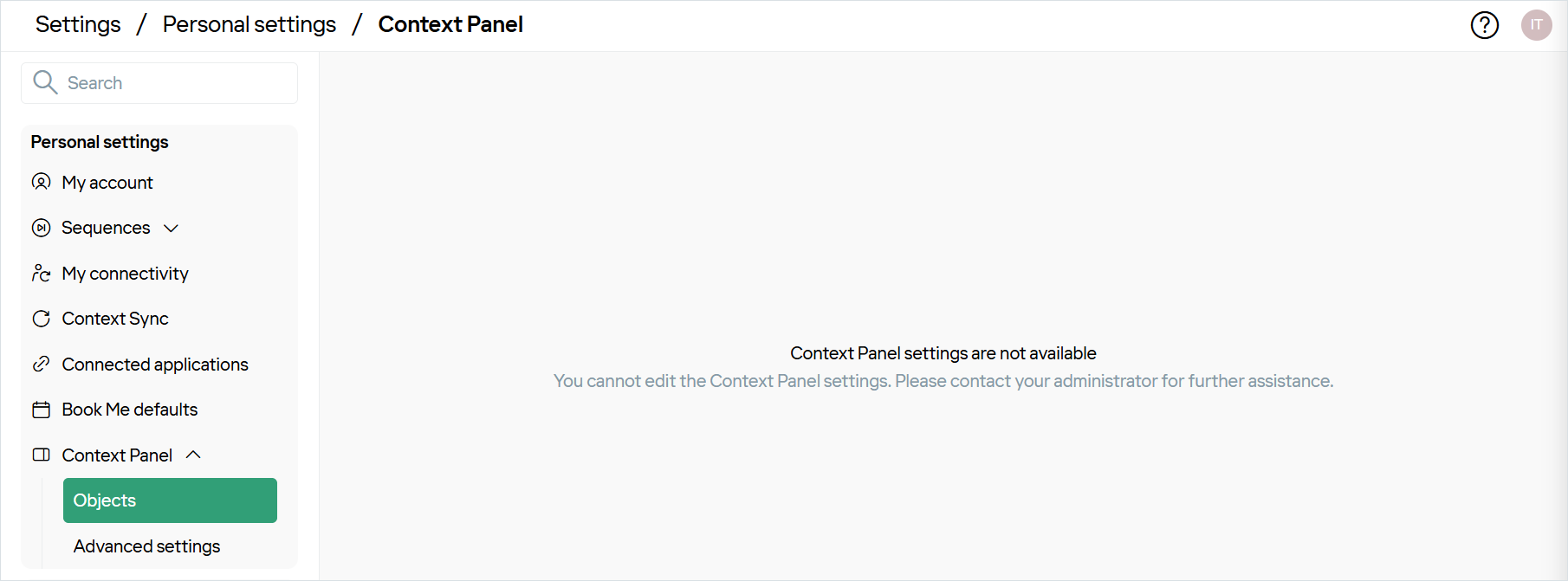
If your Salesforce account is not connected to Revenue Grid or the user is not logged in to Salesforce, the Context Panel settings pages will display the following message: “Context Panel settings are not available. You cannot edit the Context Panel settings. Please contact your administrator for further assistance.”
Configure Context Panel settings for individual users#
You can configure Context Panel settings for any user, regardless of whether presets are used.
To configure Context Panel settings for a user:
Go to Users.
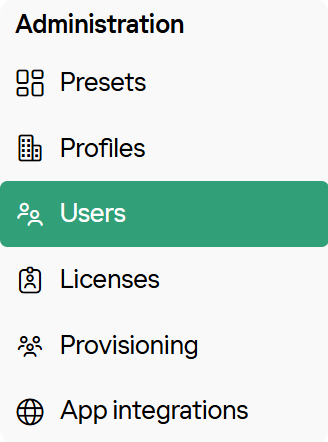
Search for the user and select their name to open the user details.
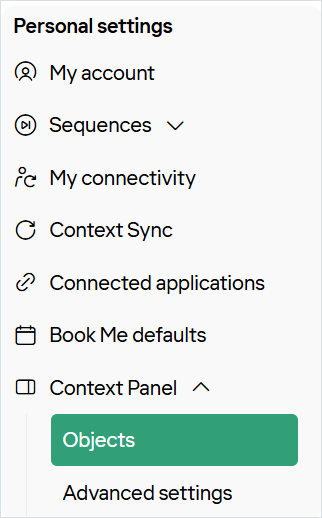
Use the Context Panel objects and Context Panel advanced settings tabs to update the configuration:
Click Save (for each tab individually).
Ask the user to refresh Context Panel to apply the changes.
Manage settings to share with other users and profiles#
When using the legacy configuration approach, you can reuse Context Panel settings by applying them from one user to others or to entire profiles using the Manage settings menu in the Admin Panel.
Important
Full management options are available only for users in profiles that do not use settings presets. If presets are enabled, only Import from a file, Export to a file, and Reset to defaults are available.
Available management options#
Action |
Description |
|---|---|
Import settings from a user |
Copy Context Panel settings from one user to another. |
Export settings to a file |
Save a user’s configuration as a |
Import settings from a file |
Apply Context Panel settings from a saved |
Share settings with users |
Apply one user’s configuration to selected users. |
Push settings to a profile |
Apply one user’s settings to all users in a profile. |
Reset to defaults |
Revert a user’s configuration to the system or profile-level default. |
Set the default profile customization |
Import a |
Import Context Panel settings from a user#
To copy Context Panel settings from one user to another:
Open the Context Panel > Objects tab of the target user.
On the toolbar, open the Manage settings menu.

Select Import from a user.
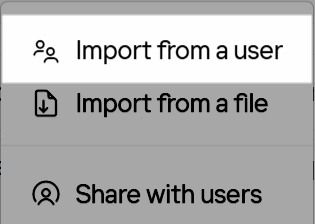
Choose the reference user and click Import.
Click Save to apply the imported settings.
Ask the user to refresh Context Panel.
Share Context Panel settings with users#
To apply a user’s Context Panel configuration to one or more other users:
Open the Context Panel > Objects tab of the reference user.
On the toolbar, open the Manage settings menu.
Select Share with users.
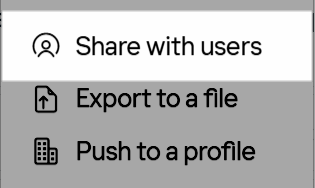
Select target users, then click Share.
Ask users to refresh Context Panel after the settings are applied.
Push Context Panel settings to a profile#
To apply Context Panel settings to all users in a profile:
Open the Context Panel > Objects tab of the reference user.
On the toolbar, open the Manage settings menu.
Select Push to a profile.
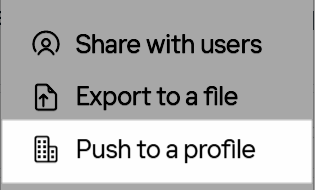
Select the target profile.
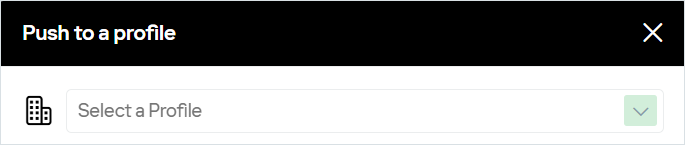
Choose:
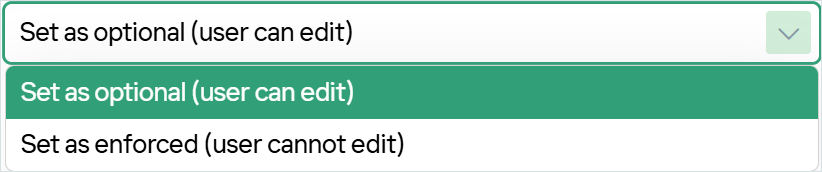
Set as optional: Allows users to modify settings.
Set as enforced: Prevents users from modifying settings.
Important
If you push settings as enforced, and you are also a user in that profile, your Context Panel will become read-only.
Click Push.
Ask profile users to refresh Context Panel.
Export Context Panel settings as a file#
To export a user’s settings as a .jsonfile:
Open the Context Panel > Objects tab of the reference user.
On the toolbar, open the Manage settings menu.
Select Export to a file.
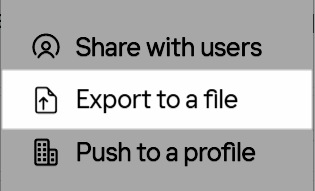
In the confirmation dialog, click Export.
Choose a location and click Save.
You can later import this file to another user or set it as the default for a profile.
Import Context Panel settings from a file#
To apply settings from a previously saved .json file:
Open the Context Panel > Objects tab of the target user.
On the toolbar, open the Manage settings menu.
Select Import from a file.
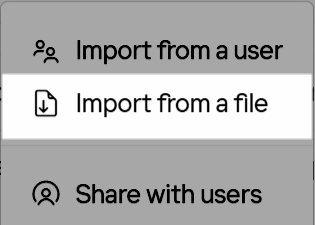
Upload the
.jsonfile: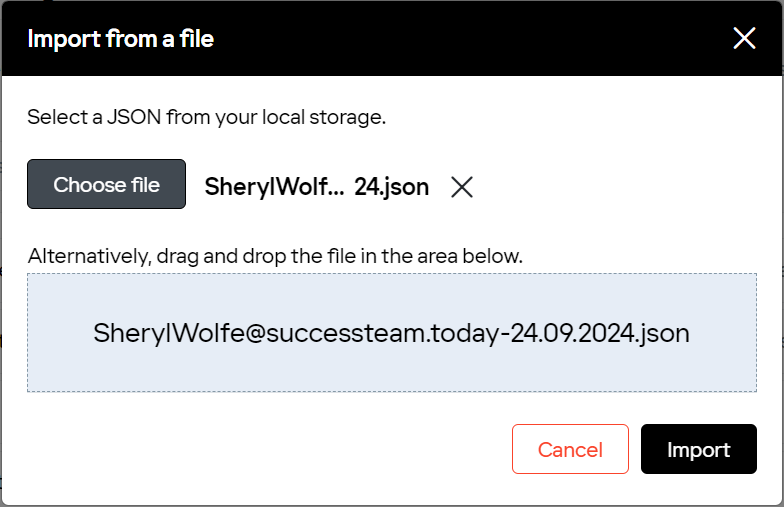
Click Choose file and select the file, or drag and drop it into the upload area.
Click Import, then Save.
Ask the user to refresh the Context Panel.
Reset user’s settings to defaults#
Resetting a user’s Context Panel settings restores one of the following, depending on the environment:
The default customization for the profile, if defined
The tenant-level customization configured by Revenue Grid Support
To reset settings:
Open the Context Panel > Objects tab of the target user.
On the toolbar, open the Manage settings menu.
Select Reset to defaults.
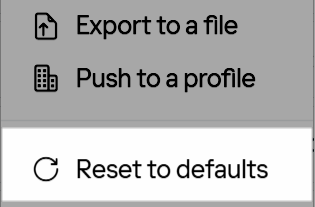
In the confirmation dialogue, click Reset.
Ask the user to refresh the Context Panel.
Set the default Context Panel customization for a profile#
To apply default Context Panel settings to a profile by importing a .json file:
Export the desired configuration from the target user as a
.jsonfile.Go to the Profiles tab.
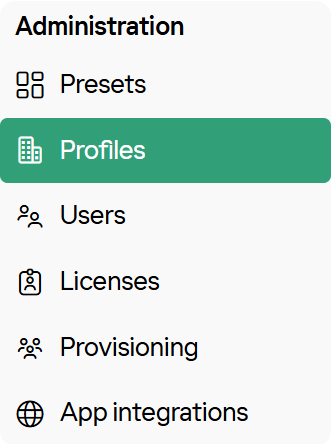
Open the target profile.
In the Details tab, under Customization, click Import.
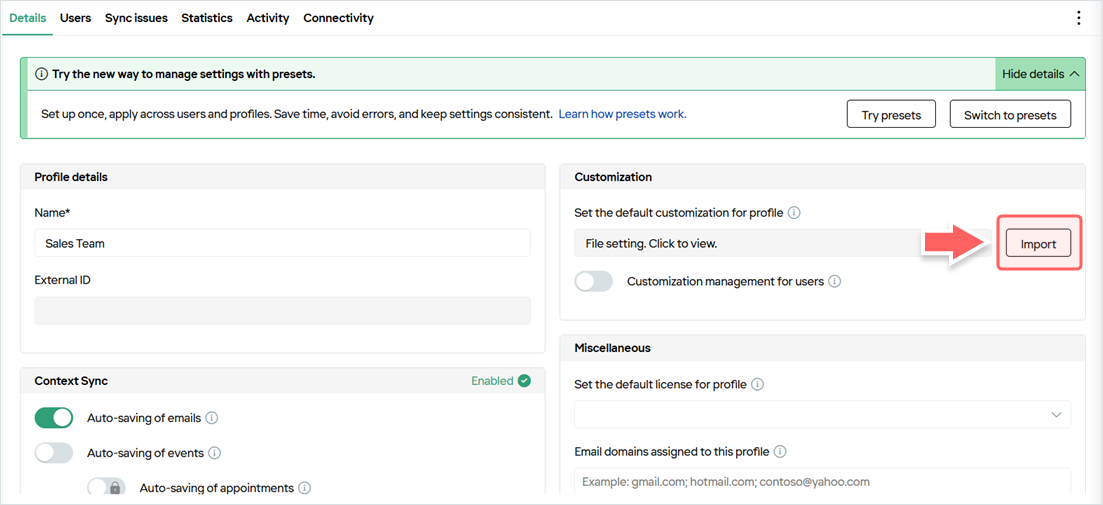
Select the
.jsonfile and click Open.Click Save.
Important
Setting a profile default does not immediately update existing users’ Sidebars—it only applies when users reset to defaults.